
You Don’t Lose Your Swing, You Lose Your Focus.
How many times has this happened to you?
Mid-round you start hitting it sideways, your score balloons and you for the rest of the round you literally don’t know where the next shot is going. Confidence is zero and you just want the round to end so you can go to the range to begin the reconstruction project that is your swing that has left you yet again.
The round mercifully ends and you immediately make your way to the range with a couple of buckets of balls. You hit your first shot and…wait, that one was perfect! Must have been a fluke. You hit another, What? That one was flushed too! You hit shot after shot and most are struck just like the old you. You ask in total frustration, “Where was that when I was playing!!!?”
We’ve all been there.
I’ve seen this scenario more times then I can count. When I was a University coach often during a tournament round I’d have a player really struggle. Afterward we’d go to the range to sort things out and he’d immediately and without much if any instruction from me hit it perfect. After seeing this pattern happen over and over I started to ask myself, Why? What I eventually determined is that a player doesn’t lose their SWING, they lose their FOCUS.
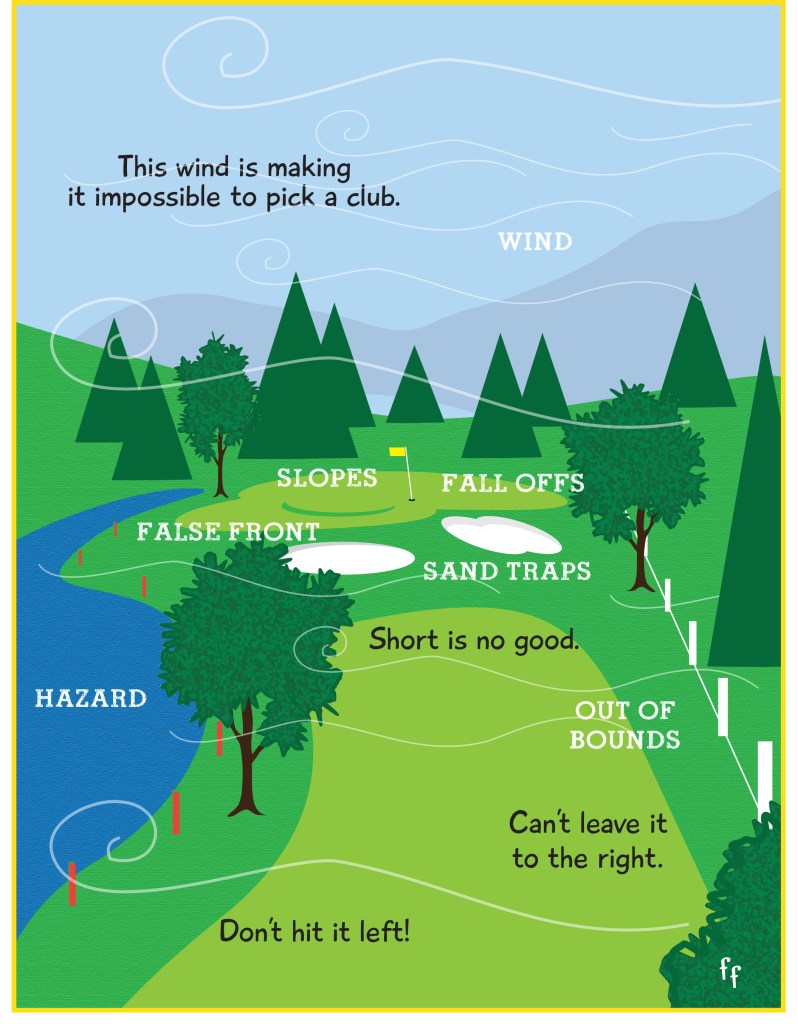
On the golf course everything is set up to make you uncomfortable. At it’s core that is really a course designers job. Beautiful lakes and brilliant white sand are fun if you are on holiday, but in golf those are the places of misery. The courses that are considered the greatest in the world are not easy, they are torture chambers. Course designers who are considered genius’s are really diabolical sadists.
Golf courses are set up to make you question every decision, see things that aren’t there, worry about things that actually are there and to create confusion and doubt with a variety of unpleasant obstacles. And if you know a course well, many times you’re worrying about holes you haven’t even played yet! Bunkers, water, trees, OB, etc. All of these distractions make it difficult to fully commit to your shot which translates into a swing that is not committed, which means that the ball is probably going fly to places you don’t want it to. After a while, you’ll feel helpless, which leads to even less committed swings which makes you think you perhaps you should be committed (institutionalized). Pause for laughter.
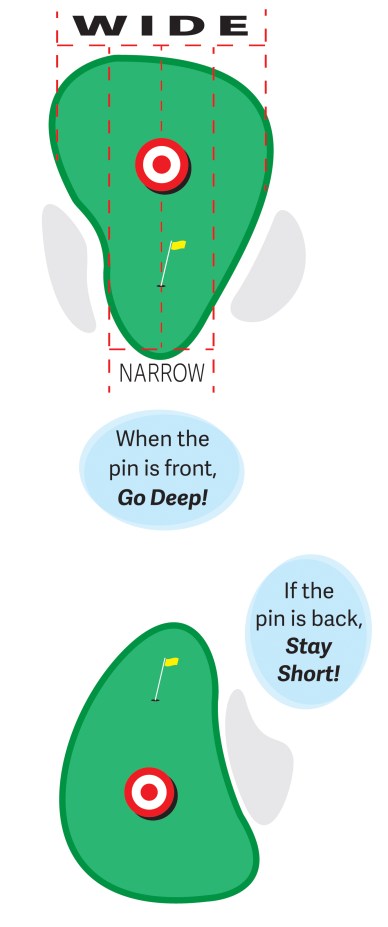
When this happens your focus becomes very wide. Meaning you see everything. Especially the bad things. You become so focused on the things you don’t want to happen that it becomes hard if not impossible to focus on the things you actually do want to happen. This confuses the brain which makes your body tense. The result, a weak and uncommitted swing. Time to re-load.
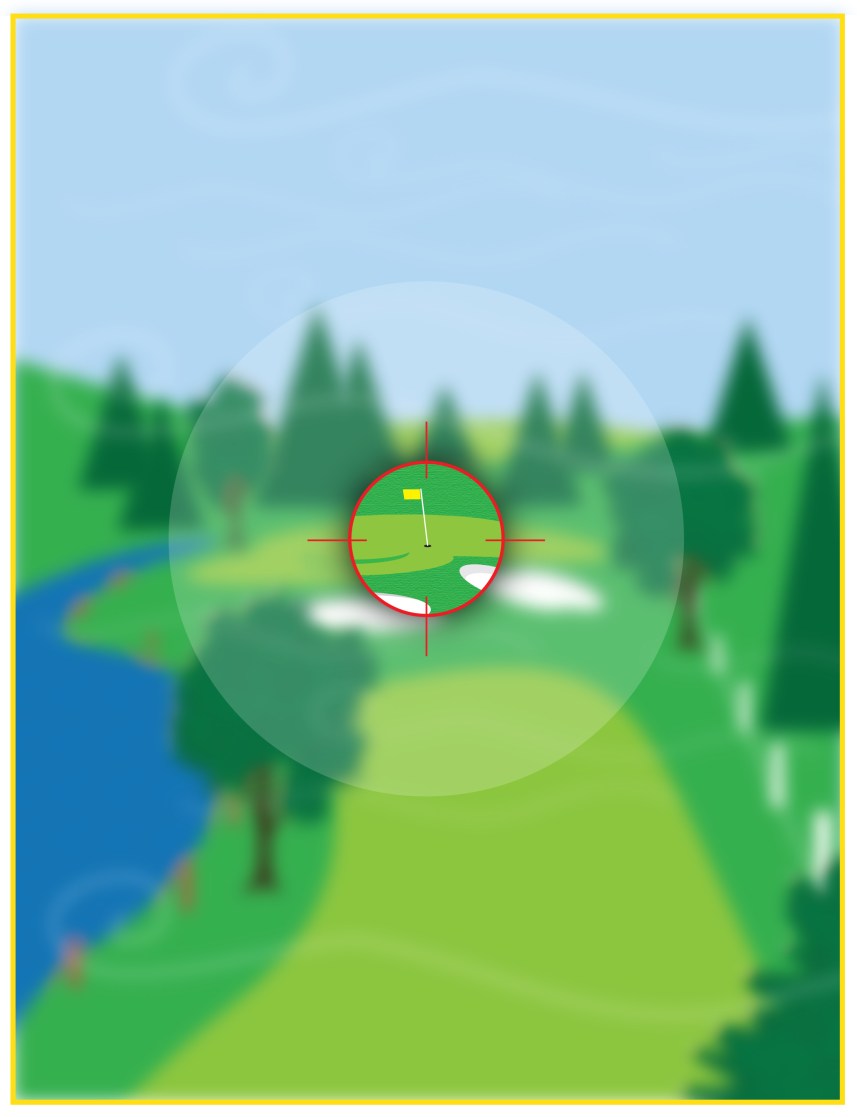
To combat this mental warfare we need to focus our attention on the smallest target possible. Try this, stare at something very small and notice that pretty quickly everything else seems to disappear. This is called Tunnel Vision. This tunnel vision sends clear signals to the brain on what you want to have happen. The result will be a far better shot.
This can also explain why you hit balls on the range so much better. There are no hazards or OB to worry about. Nor is there any scoring consequence for a shot flying off line. Since you are not playing for a score, your attitude is more carefree and thus you are more able to swing free. Which of course leads to a better result.
So the question is, How do you take your range swing to the course?
There are 3 things you need to do:
- The first thing I want is to completely focus your attention on the smallest possible target. Look where you want the ball to finish, refuse to look at where where you don’t want it to go. Try this and notice how the “tunnel vision” effect takes over. You won’t see much else other than your target. This sends clear signals to the brain on what you want to do. The result will be a far better shot.
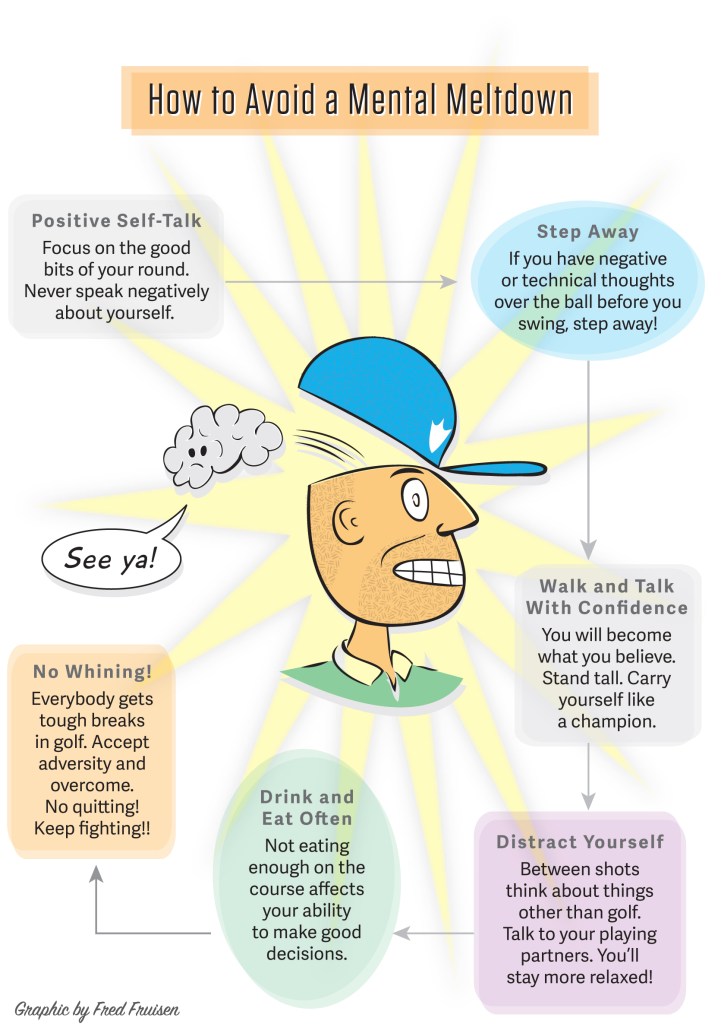
- The second thing I want you for you to do is to have an empty head over the ball. There should be no technical thoughts and especially no worry or negative thoughts running through your mind. Now is the time to be an athlete, it is not the time to be analytical. It’s time to react, not think. If you do have negative thoughts over the ball, step away and go through your pre-shot routine again. You’ll end up saving a lot of time because you won’t be off somewhere looking for your ball.
- The last thing I want to see my golfers do is commit to make a full finish on each swing. A full finish to me means the club finishes well behind your head. Preferably the shaft touches you somewhere on your back, neck or head. This will help you get off your back foot and a million other things that encourage a good shot.
Regardless of level, a non committed swing leads to bad results. Even pros get nervous over shots or feel uncomfortable. They overcome this by being able to commit to their swing and live with the consequences. If it works for them, it will work for you too.
This article also appears in the September, 2018 issue of New Zealand Golf Magazine.
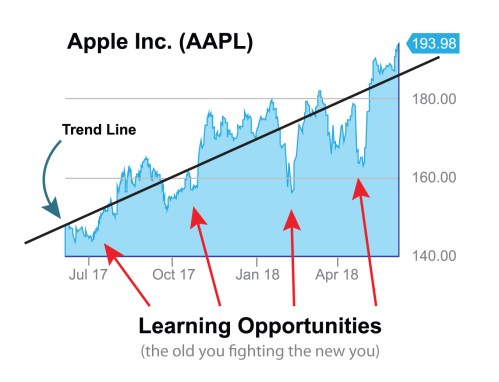
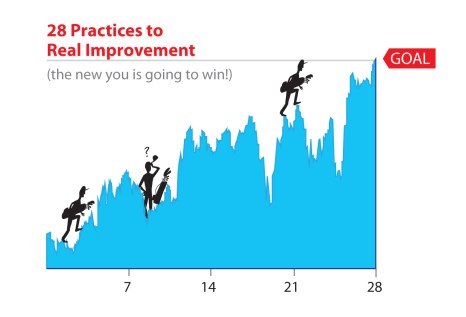 Wise investors don’t panic and sell when this happens. They understand that this is completely natural and if they stick with the stock, over time they will see a tidy profit. Also, you can be assured that following the dips, as shown in the chart, the stock rises to new highs as new skills are ingrained. That being said, notice the TREND of the stock. The trend is very positive. If you were in the market for a good stock, this would most definitely be a BUY! You need to look at yourself and your progress in the same philosophical way.
 Progress may not be happening as fast as you would like, but it is happening. Focus on your trend.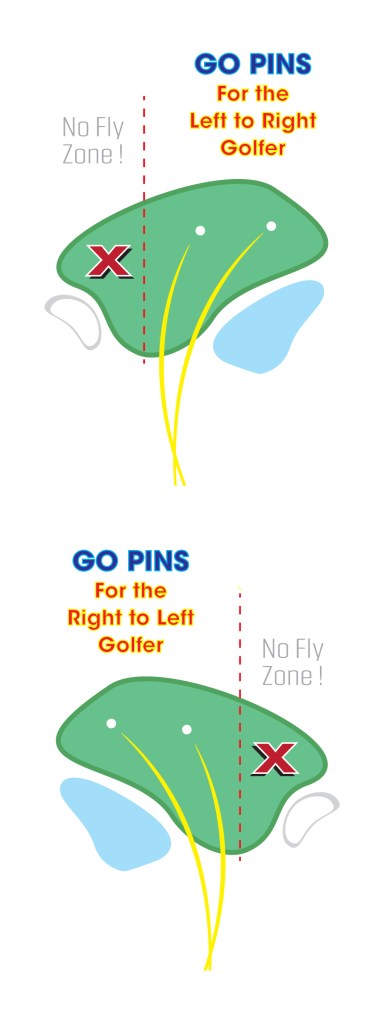



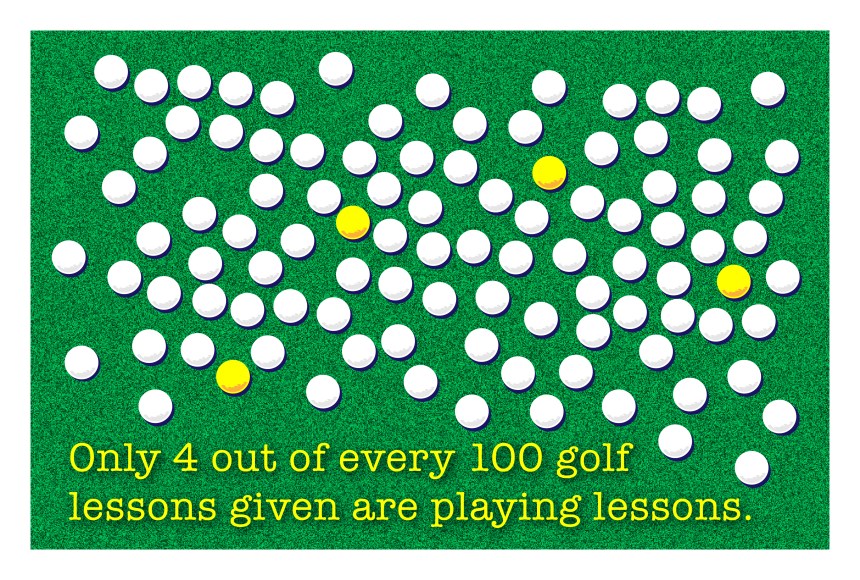 Only about 4% of all golf lessons given are playing lessons. I believe that this is one of the big factors preventing golfers from improving as much or as fast as they should. Golfers aren’t given the knowledge to know what to do—or more importantly, what NOT to do—on the golf course. I see this as a recipe for failure. So, in some ways your poor score is not your fault. The fact is, you haven’t been trained on how to PLAY golf. In fact, years ago I was going to give a talk about this very topic at PGA training and they told me straight out, “You can’t give this talk.” I was stunned when I heard this. Anyone who knows me won’t be surprised to know that I gave the talk anyway.
 Fred Fruisen, Timaru, New Zealand Golf Coach